
If your home has ever experienced water damage whether from a burst pipe, a flood, or a leaking roof there’s one thing you need to know: mold can start growing within just 24 to 48 hours. This often surprises homeowners, because mold can seem like a minor issue until it becomes fully visible and, by then, much harder to control.
In this blog, we’ll break down exactly how fast mold grows after water damage, what conditions accelerate its growth, the warning signs to watch for, and how you can prevent it — plus when it’s time to call in a professional mold removal service.
The Mold Growth Timeline
Mold is a fungus that develops from spores that are naturally present in the air around us. These spores stay dormant until they find the right environment — moisture, warmth, and an organic surface to grow on. Unfortunately, water damage creates exactly these conditions almost instantly.
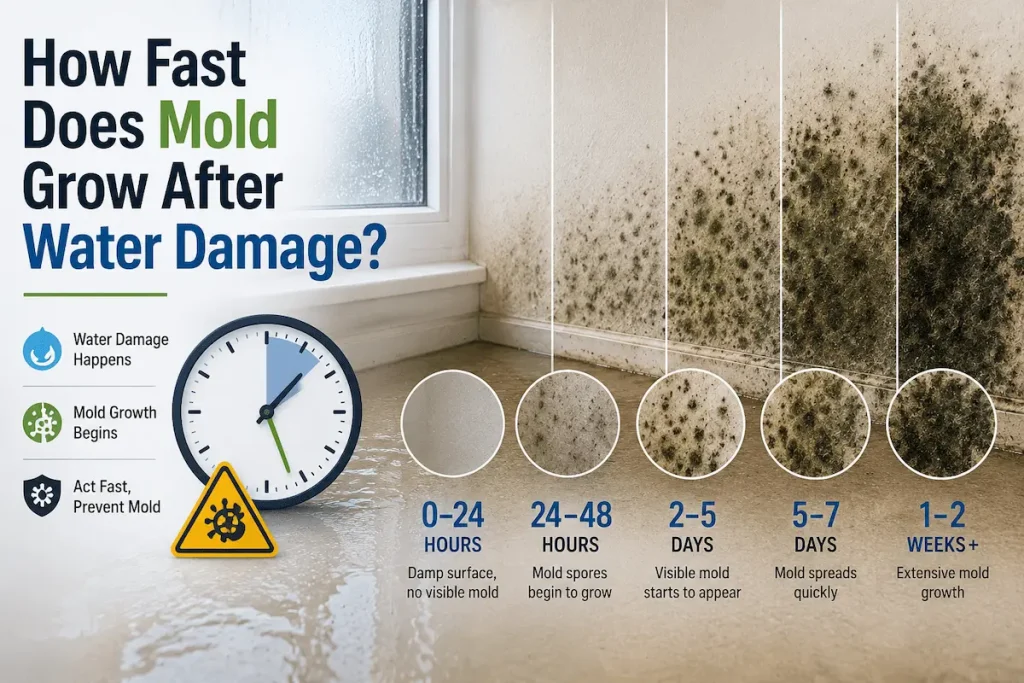
Hour-by-hour breakdown:
- 0–24 hours: Water begins absorbing into surfaces like carpet, drywall, and wood. Humidity levels rise rapidly.
- 24–48 hours: Mold spores become active and growth begins — especially in areas with poor ventilation.
- 48–72 hours: Mold may become visible, particularly in damp corners, baseboards, and ceilings.
- After 1 week: If moisture isn’t addressed, mold can spread throughout the affected area and structural damage may begin.
This is exactly why emergency water damage removal is so critical — the faster water is extracted and the area is dried, the lower the risk of mold taking hold.
Factors That Speed Up Mold Growth
- High humidity – Humidity above 60% creates an ideal environment for mold
- Poor ventilation – Basements and bathrooms often lack proper air circulation
- Temperature – Warm temperatures (68–86°F / 20–30°C) accelerate mold growth further
- Organic materials – Wood, drywall, carpet, and wallpaper act as a “food source” for mold
- Standing water – If water in a flooded basement isn’t cleaned up right away, mold risk increases significantly
Warning Signs That Mold Is Growing in Your Home
- A musty or damp odor (especially in basements or bathrooms)
- Discoloration or spotting on walls or ceilings
- Peeling paint or wallpaper
- Household members experiencing frequent sneezing, coughing, or allergy symptoms
- Condensation on windows or persistent dampness on walls
If you notice any of these signs, it likely means black mold or regular mold growth has already begun — and at this stage, DIY cleaning usually isn’t enough.If you want to learn more about mold removal or the different types of mold, click Read Moro…
How to Prevent Mold Growth
- Remove water immediately – Fully drying the area within 24-48 hours of water damage is the most critical step
- Use dehumidifiers and fans – These significantly speed up moisture reduction
- Improve ventilation – Open windows, run exhaust fans
- Check carpets and padding – These absorb the most moisture and can become a hidden mold source
- Inspect regularly – Especially in high-moisture areas like basements, bathrooms, and kitchens
Keep in mind — prevention tips only work when the damage is minor. If water levels were significant or more than 48 hours have already passed, calling in professionals is the safer decision.
When DIY Cleaning Isn’t Enough
Small surface mold can often be cleaned on your own, but professional mold removal service becomes necessary in these situations:
- Mold has spread across more than 10 square feet
- Mold has gotten into the HVAC system or inside walls
- Household members have allergies, asthma, or respiratory conditions
- There’s a musty smell but no visible mold (meaning it’s likely growing inside the walls)
- Water damage was caused by flooding or a major leak
In these cases, professionals have access to proper equipment — moisture meters, air scrubbers, and antimicrobial treatments — that are far more effective than surface cleaning alone.
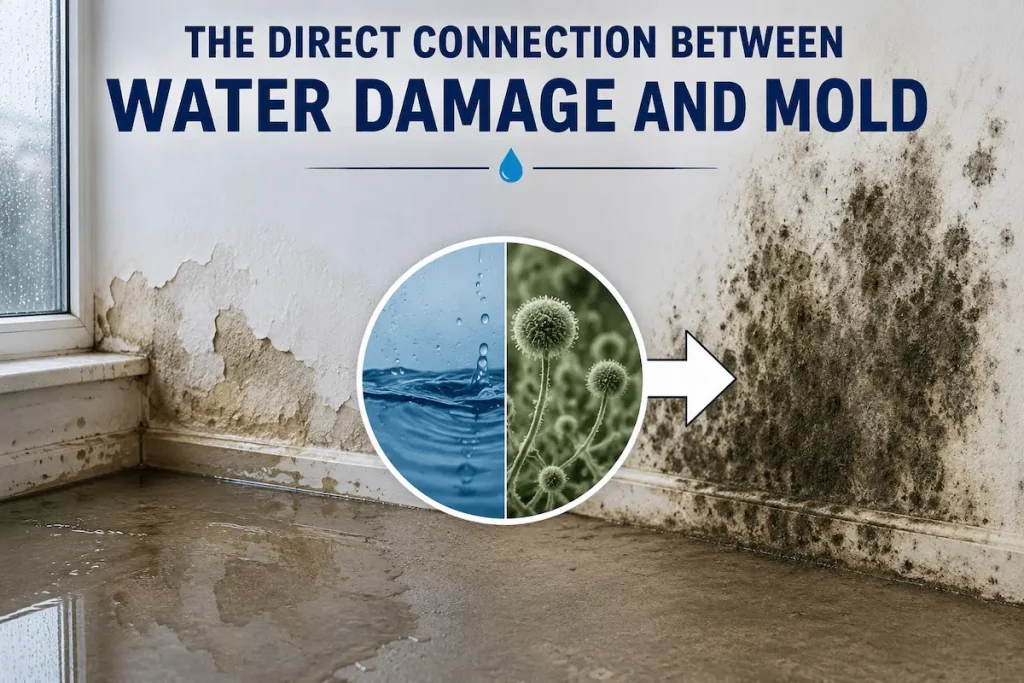
The Direct Connection Between Water Damage and Mold
It’s important to understand that mold removal and water damage restoration are deeply connected processes. If mold is cleaned but the moisture source isn’t fixed, mold will simply return. That’s why professional restoration companies typically offer both services together:
- First, water damage removal – extracting water and drying the affected area
- Then, mold removal – safely treating any mold that has already developed
- Finally, restoration – replacing damaged materials and setting up long-term prevention
Conclusion
Mold can start growing just 24 to 48 hours after water damage occurs — which is why acting quickly is the single most important factor in preventing it. If your home has recently experienced a leak, flood, or any water-related damage, don’t wait.
Our team handles everything from emergency water removal to complete mold removal and water damage restoration every step of the way, to keep your home safe and healthy.
Contact us today and book a free inspection — don’t give mold the chance to spread.