
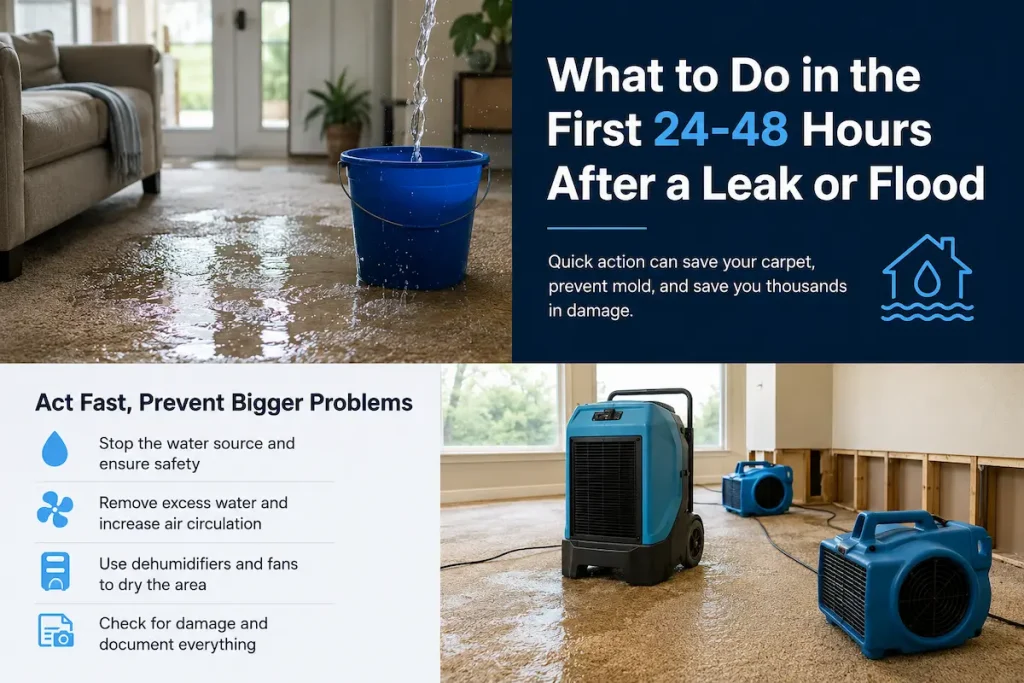
What to Do in the First 24-48 Hours After a Leak or Flood
Water damage rarely announces itself politely. A pipe bursts overnight, a washing machine hose gives out, or heavy rain finds its way through a basement window and suddenly you’re standing in a puddle wondering what to do first. The good news is that the first two days after water damage matter more than almost anything else that follows. Act quickly and correctly, and you can often save your carpet, your flooring, and a lot of money. Wait too long, and even a small leak can turn into a much bigger problem involving mold, warped subfloors, and ruined carpet padding.
Here’s a practical, step-by-step guide to what homeowners should do in that critical first 24 to 48-hour window.
Why the First 48 Hours Matter So Much
Water and time are a dangerous combination. Once carpet, padding, or drywall gets wet, mold spores that are naturally present in almost every home can begin colonizing within 24 to 48 hours under the right conditions. After that point, what started as a cleanup job can turn into a remediation job, which is a bigger, more expensive undertaking.
This is why speed matters more than perfection. You don’t need to do everything flawlessly, but you do need to act fast to limit how much moisture soaks into your home’s materials.
Hour 1: Stop the Water and Ensure Safety
Shut Off the Source
If the water is coming from a plumbing issue, locate your main water shutoff valve and turn it off immediately. For appliance-related leaks, like a dishwasher or washing machine, shut off the valve behind the specific appliance if possible.
Cut the Power if Needed
If water has reached outlets, electrical panels, or appliances, and it’s safe to do so, shut off electricity to the affected area at the breaker box. If you’re unsure, it’s safer to wait for a professional than to risk electrical shock.
Check for Structural or Health Hazards
Standing water from sources like sewage backups or floodwater can carry contaminants. If the water source is unclean, avoid direct contact and consider this a job for a restoration professional from the start.
Hours 1-6: Remove Excess Water and Start Drying
Extract Standing Water
Use a wet/dry shop vacuum, mops, or towels to remove as much standing water as possible. If the water is extensive or difficult to remove, consider professional emergency water removal to extract standing water quickly and reduce the risk of moisture soaking into carpet padding, baseboards, or subflooring. The faster you remove bulk water, the less time it has to cause further damage.
Move Furniture and Belongings
Lift furniture legs onto blocks or aluminum foil to prevent moisture transfer and staining. Remove rugs, boxes, and any fabric items sitting directly on the wet area, since porous materials absorb water quickly and can become a mold risk themselves.
Increase Air Circulation
Open windows if the weather allows, and set up fans to point across wet surfaces rather than directly at walls. Air movement helps speed up evaporation, which is one of the most important factors in preventing mold growth.
Run a Dehumidifier
If you have access to one, run it in the affected room. Lowering the humidity level helps pull moisture out of the air and out of damp materials like carpet and drywall.
Hours 6-24: Assess the Damage
Check How Deep the Water Traveled
Lift a corner of the carpet, if it’s safe to do so, and check the padding underneath. If the padding is soaked, it usually cannot be fully dried and typically needs to be replaced, even if the carpet itself is salvageable.
Look for Early Warning Signs
- A musty smell developing in the room
- Discoloration on walls or baseboards
- Carpet that still feels damp to the touch after several hours of fans and dehumidifiers running
Document Everything
Take photos and videos of the damage before you start major cleanup. This is useful for insurance claims and gives you a clear record if you need professional help assessing the extent of the damage later.
Hours 24-48: Decide on Next Steps
By this point, you should have a good sense of whether the situation is manageable on your own or whether it needs professional attention.
Signs You Can Likely Handle It Yourself
- The water source was clean (not sewage or floodwater)
- The area affected was small and dried within 24 hours
- There’s no lingering odor or visible discoloration
Signs You Need Professional Help
- Carpet padding stayed wet for more than 24 hours
- A musty smell has developed
- The affected area is large, or water reached multiple rooms
- You’re dealing with contaminated water from flooding or a sewage issue
- You notice any spots that look like early mold growth
If any of these apply, it’s worth having a professional take a closer look. Our Water Damage Restoration Oakville experts can inspect the affected area, identify hidden moisture, and prevent further damage before mold becomes a bigger problem. Carpet that has absorbed water often looks fine on the surface long after the padding underneath is still damp, and that hidden moisture is exactly what leads to mold problems weeks later.
Why Carpet Needs Extra Attention After Water Damage
Carpet is one of the trickiest materials to fully dry after a leak or flood. Unlike hardwood or tile, it has multiple layers — the visible fibers, a woven backing, and a cushioned pad underneath — and each layer holds moisture differently. Even when the top of the carpet feels dry to the touch, the padding below can stay damp for days if it isn’t properly extracted and ventilated.
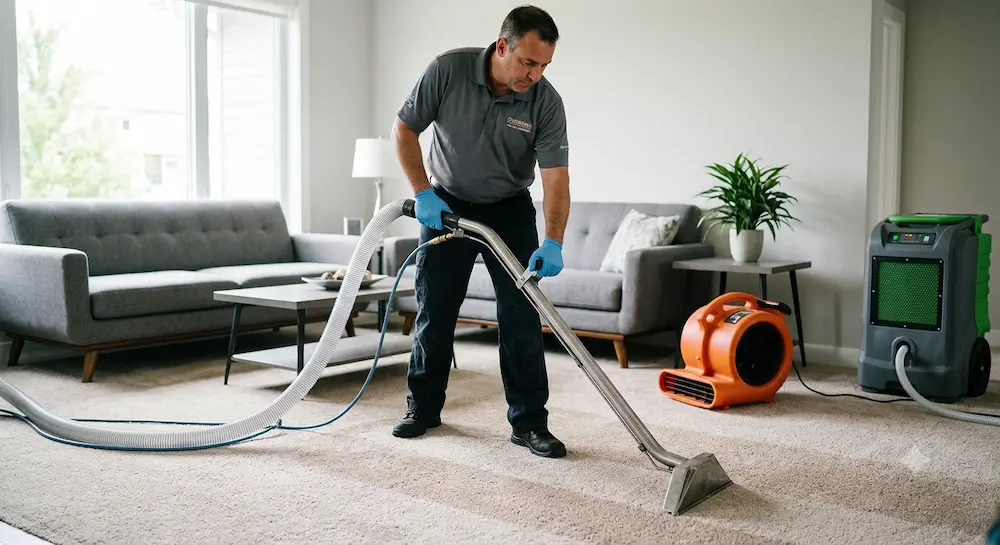
This is where a lot of homeowners run into trouble. Fans and a wet/dry vacuum can handle surface water, but they usually aren’t enough to fully dry carpet padding that has absorbed a significant amount of water. If drying isn’t thorough, moisture trapped beneath the carpet becomes an ideal environment for mold, and by the time it’s noticeable, the damage is often more extensive than it needed to be.
If your carpet has been affected by a leak or flood and you’re not confident it’s fully dry, it’s worth reaching out to carpet cleaning Langley BC provider who has the equipment to properly extract moisture and assess whether the padding and carpet can be saved. Professional-grade extraction tools pull water out of the padding in a way that home equipment typically can’t, which makes a real difference in preventing mold and preserving the carpet underneath.
Simple Tips to Reduce Risk Going Forward
- Know your main water shutoff location before an emergency happens, not during one.
- Check appliance hoses annually, especially on washing machines and dishwashers, since these are common sources of sudden leaks.
- Install a water leak detector near washing machines, water heaters, and under sinks for early warning.
- Keep a wet/dry vacuum on hand so you’re ready to act the moment water appears.
- Avoid carpeting basements in flood-prone areas, or use moisture-resistant padding if you do.
- Test your sump pump (if you have one) before rainy seasons to make sure it’s working properly.
Final Thoughts
The first 24 to 48 hours after a leak or flood set the tone for everything that follows. Quick action — stopping the water, removing moisture, and drying the area thoroughly — can be the difference between a minor inconvenience and a costly mold problem. Carpet, in particular, deserves extra attention, since damage often hides beneath the surface long after things look dry. When in doubt, it’s better to have the area properly assessed than to assume everything dried out on its own.