
Signs of Hidden Water Damage in Your Oakville Home
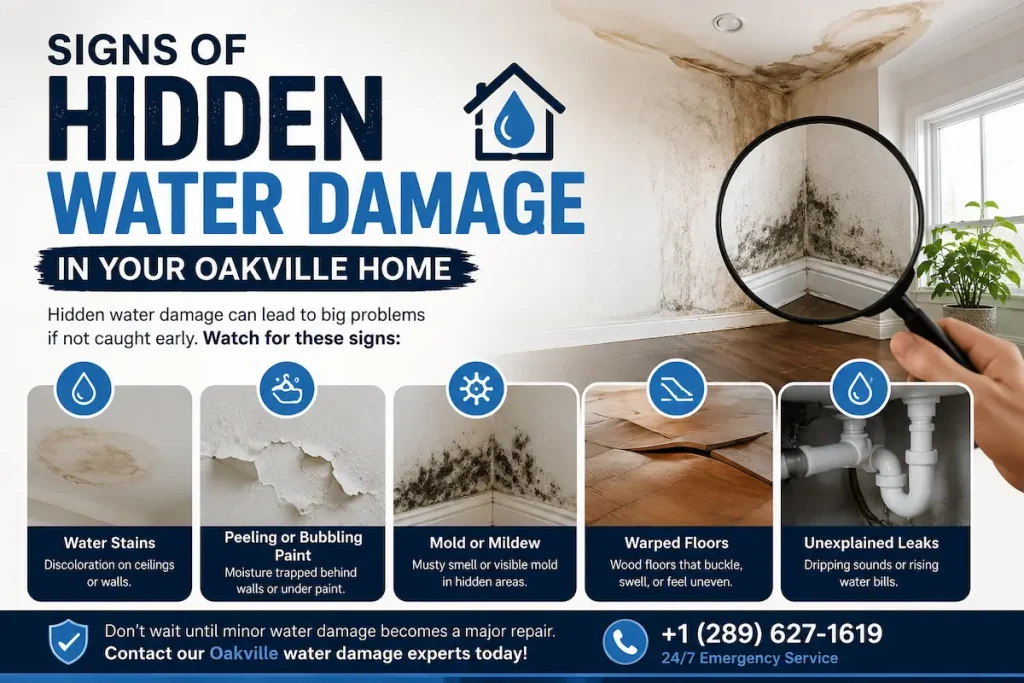
Hidden water damage can cause stains, moisture, odors, and structural problems if left untreated.
Water damage doesn’t always announce itself with a burst pipe or a flooded basement. More often, it starts quietly — a slow drip behind a wall, a small leak under a sink, moisture creeping into a crawlspace after a heavy rain. By the time it’s visible, the damage has usually been building for weeks or even months.
For Oakville homeowners, this is especially worth paying attention to. Between lake-effect humidity, older home plumbing in some neighbourhoods, and our share of heavy spring and summer storms, conditions here can quietly encourage hidden water damage. Catching it early is almost always the difference between a straightforward repair and a much larger, more expensive restoration project.
This guide walks through the warning signs to watch for, where hidden water damage tends to hide, and what to do if you suspect a problem in your home.
What Is Hidden Water Damage?
Hidden water damage refers to moisture that’s accumulating somewhere out of sight — inside wall cavities, under flooring, above ceilings, or behind appliances — rather than in a spot you’d notice right away.
It can come from a slow plumbing leak, a small roof failure, condensation around poorly insulated pipes, or grading issues that let water seep toward your foundation. Because it’s not immediately visible, it tends to go unnoticed until it either becomes a bigger issue or starts producing secondary signs, like odours or discolouration.
Unlike a burst pipe, hidden water damage rarely shows up all at once. It builds gradually, which is exactly why homeowners benefit from knowing what subtle signs to look for.
Signs of Hidden Water Damage in Your Oakville Home
1. Musty or Unusual Odours
A persistent musty smell, especially in a basement, bathroom, or near an exterior wall, is often one of the earliest signs of hidden water damage in a home. That smell is usually caused by moisture sitting somewhere it shouldn’t, often paired with early mold or mildew growth. If an odour keeps returning even after cleaning, it’s worth investigating further.
2. Discolouration on Walls or Ceilings
Yellow, brown, or copper-coloured stains on drywall or ceilings usually mean water has been present at some point, even if the area feels dry now. Ceiling water damage in particular often points to a roof leak or a plumbing issue on the floor above.
3. Peeling, Bubbling, or Cracked Paint
When paint starts to bubble, peel, or crack for no obvious reason, it’s often because moisture is trapped underneath the surface, pushing against the paint layer. This is a common early indicator of water damage behind walls.
4. Warped or Swollen Flooring
Hardwood that’s cupping, laminate that’s lifting at the seams, or tile that feels slightly uneven can all point to moisture underneath the flooring. Wood and some laminates are especially sensitive to sustained moisture, so this sign tends to show up relatively early.
5. Soft or Damaged Drywall
Drywall that feels soft, spongy, or slightly bowed when pressed has likely absorbed moisture. This is a sign that shouldn’t be ignored, since compromised drywall can eventually lead to structural issues in the surrounding framing.
6. Unexpected Increase in Water Bills
If your water bill jumps without a clear reason — no new appliances, no change in household habits — a hidden leak somewhere in your plumbing system is one of the more common explanations. This is often one of the first measurable clues homeowners notice.
7. Mold or Mildew Growth
Mold after water damage is common, since mold typically needs sustained moisture to establish itself. Finding mold in a spot that seems otherwise dry is a strong sign that moisture is present somewhere nearby, even if you can’t see the source directly.If you want know about mold read more…
8. Sounds of Dripping or Running Water
Hearing water when no taps are running, especially inside walls or under floors, is a sign worth taking seriously. It usually means water is moving somewhere it isn’t supposed to be.
9. Doors or Windows Suddenly Sticking
When wood absorbs moisture, it can expand slightly, which sometimes causes doors or windows to stick or no longer close properly. If this happens without any other obvious explanation, moisture nearby is worth ruling out.
10. Damp Areas That Keep Returning
A damp patch on a wall or floor that dries up and then reappears is a classic sign of an ongoing leak rather than a one-time event. Recurring dampness almost always means the underlying source hasn’t been resolved.
Where Hidden Water Damage Commonly Occurs
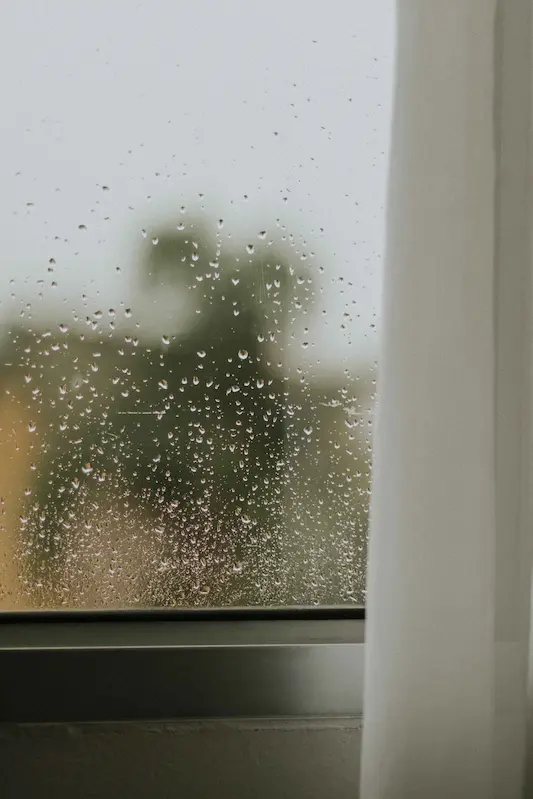
Moisture buildup around windows can be an early sign of hidden water problems.
Hidden water damage tends to show up in predictable places, which makes it easier to know where to check first:
-
- Behind walls, particularly around plumbing lines or exterior walls facing prevailing weather
-
- Under flooring, especially in bathrooms, kitchens, and basements
-
- Around plumbing fixtures, including toilets, tubs, and showers
-
- Beneath sinks, where slow supply line or drain leaks are easy to miss
-
- Around appliances, such as dishwashers, washing machines, and water heaters
-
- In basements, due to foundation seepage, window wells, or sump pump issues
-
- Around roofs, windows, and exterior walls, where flashing, sealant, or grading problems can let water in gradually
Many Oakville homes, particularly older ones near the lakeshore or in established neighbourhoods, have plumbing and roofing systems that are due for closer inspection simply because of age. That doesn’t mean something is wrong — it just means these areas deserve a periodic check.
Why Hidden Water Damage Should Be Addressed Quickly
Hidden water damage rarely stays the same size. Left alone, it tends to spread, and the consequences can include:
-
- Structural deterioration, as wood framing and subflooring weaken over time
-
- Mold growth, which can develop within days of sustained moisture exposure
-
- Damaged flooring and drywall, often requiring full replacement rather than a simple patch
-
- Electrical risks, if moisture reaches wiring or outlets near affected areas
-
- More expensive restoration, since addressing a small leak is almost always less costly than repairing months of accumulated damage
None of this means every damp spot is an emergency. But moisture that’s been sitting for a while, or that keeps coming back, tends to get more complicated the longer it’s left unaddressed.
What to Do If You Suspect Hidden Water Damage
If you notice one or more of the signs above, a few practical steps can help before you call in a professional:
-
- Identify and stop the water source if it’s safe to do so — for example, shutting off a supply valve under a sink
-
- Avoid disturbing contaminated water, particularly if it may be linked to a sewer backup or has been sitting for a long time
-
- Check visible areas nearby, such as adjoining walls, ceilings below bathrooms, or the underside of cabinets
-
- Document the damage with photos or notes, which can be helpful for insurance purposes
-
- Contact a qualified water damage restoration professional to assess what’s happening behind the scenes
Trying to fully diagnose hidden water damage on your own can be difficult, since the source and the visible symptom aren’t always in the same place.
When to Call a Water Damage Restoration Professional
Some situations are reasonable to monitor for a short time. Others benefit from a professional assessment sooner rather than later.
It’s generally worth calling in a professional when:
-
- The source of the moisture isn’t obvious
-
- You suspect moisture behind walls or under flooring
-
- Mold is visible or the smell of mold keeps returning
-
- A damp area keeps reappearing despite cleaning or drying it out
-
- The affected area is large, or involves a ceiling, multiple rooms, or a shared wall
A professional assessment typically involves moisture readings, thermal imaging, or targeted inspection to confirm where water is coming from and how far it has spread — information that’s difficult to gather with a visual check alone. If you’re in the Oakville area and want a proper assessment, our team at Water Damage Restoration Oakville can help pinpoint the source and outline the right next steps. If mold has already developed, it’s worth looking into mold removal in Oakville as part of the process, since drying the area alone won’t necessarily address existing growth.
For homeowners dealing with a wetter basement or a fixture that’s failed outright, resources like basement flooding repair or emergency water removal may also be relevant, depending on how the situation has developed. And for larger events involving significant water intrusion, a dedicated flood damage cleanup service may be the more appropriate starting point.
Final Thoughts
Hidden water damage is easy to miss because, by definition, it’s not meant to be seen. Musty odours, ceiling stains, soft drywall, warped flooring, and recurring damp patches are all signals worth paying attention to rather than dismissing.
The earlier these signs are addressed, the simpler the repair tends to be. If something in your Oakville home has felt slightly off — a smell that won’t go away, a stain that keeps reappearing, or a floor that doesn’t feel quite right underfoot — it’s worth having it looked at before it becomes a larger project.